

Our fertility lawyers and assisted reproduction attorneys are aware that embarking on the journey of assisted reproduction, whether it’s through surrogacy or in vitro fertilization (IVF), is a deeply personal and often complex process. For years, Canadians facing difficulties relating to having children have devoted significant emotional and financial investments to start families.
At times, they have even been confronted by unrealistic expectations, fears, and prejudices, which have later resulted in them abandoning their dreams.
Fertility Laws in BC | Risks of Using Assisted Reproduction
Assisted Reproduction law in BC is complex and can expose parents and donors to major risks if not approached cautiously and with care. The best way to embark in surrogacy, IVF or any other procedure is to enter into detailed, well thought out and comprehensive agreements to best protect the interests of all parties involved.
Without appropriate legal advice, parents and donors can face many issues, examples of which include:
- what happens if a surrogate mother decides to keep the child?
- what expenses are covered during the IVF or surrogacy process?
- will an egg or sperm donor have rights to visit the child?
- who is allowed to attend the birth of the child?
- what if a surrogate takes drugs or alcohol during pregnancy?
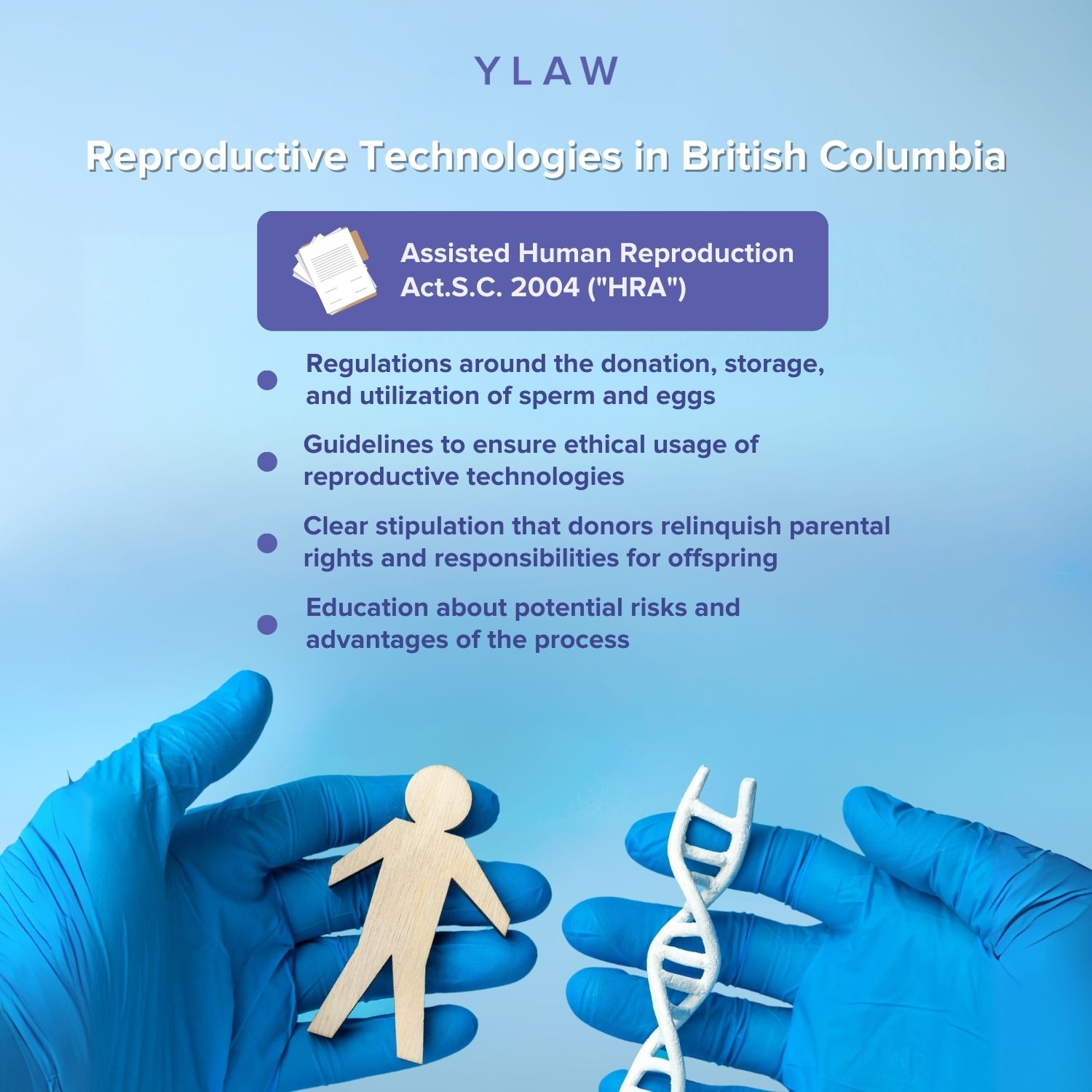
Who Will Need Fertility or Assisted Reproduction Agreements?
Many individuals / couples who wish to start a family could benefit from fertility and assisted reproduction agreements in BC. These individuals include:
- Couples struggling with fertility
- Same sex couples
- Those planning to use donor eggs;
- Those planning to use donor sperm;
- Those planning to use embryo donations
- Those planning to have a surrogate carry the baby
It is recommended that intending parents, donors and surrogates consult with a fertility lawyer about egg donor agreements, sperm donation agreements, and surrogacy agreements in BC.
What Types of Fertility or Assisted Reproduction Agreements are There?
There are 4 main types in British Columbia:
- Surrogacy Agreements
- Egg Donor Agreements
- Sperm Donor Agreements
- Embryo Agreements
What Should an Egg Donation Agreement Address in BC?
In egg donation cases, an agreement preferably drafted for a fertility lawyer should outline many factors including but not limited to:
- If a woman donates an egg to another family undergoing IVF treatment, will she have any visitation rights with the child?
- Are donors selected privately or provided by the BC Government?
- If donors are selected privately, then who pays for the medical process and related treatment to remove ova from the donor?
- What types of expenses are covered?
- What types of expenses are legal or allowed?
Section 24 of the Family Law Act provides that a donor is not a parent of a child born through assisted reproduction by reason of the donation alone. A donor agreement would further clarify and confirm parental rights.
It is very important to speak to an assisted reproduction lawyer in BC to better understand your rights and obligations, and to enter into an agreement that protects you from risk.
What Should a Sperm Donation Agreement Address?
The sperm donation agreement needs to clarify and address:
- the legal requirements and implications of sperm donation
- the rights and obligations of both the donor and the recipient(s)
- specify what should happen in case of a dispute
- specify what specific expenses will be covered, and by who
What Should an Embryo Donation Agreement Address?
The first step in entering an embryo donation agreement is deciding whether the embryo donor will be a parent or not. Depending on the answer, the contents of the embryo agreement will differ.
If the donor is a parent
In this situation, the agreement prior to conception is required and will mainly discuss the specific responsibilities of each parent and what would happen in case the parties separate and have the child. Will the donor have parental rights? And if so, to what extent?
If the donor is not a parent
The embryo donor and parents are not required to enter into an embryo agreement but they should almost always do so. This is because:
- you can specify who will have the obligation to support the child or children and who will not;
- responsibilities of all parties prior, during and after pregnancy
- who will pay for the donor’s expenses and what type of expenses are covered?
- what happens in case of non-payment of expenses?
- what if the baby is born with birth issues?
- what if there is a miscarriage and what happens to the expenses already paid?
- what happens if the donor revokes consent to use the embryo?
What Should a Surrogacy Agreement Address?
Surrogacy arrangements also raise different legal concerns. An agreement could address:
- What happens in the event of an IVF treatment failure?
- Who is liable, if anyone?
- What benefits does a surrogate receive after a full term?
- What happens if the surrogate decides to keep the baby?
- What happens if the surrogate disappears?
- What happens if there is a miscarriage?
- What costs are legally covered?
Given these legal matters’ sensitive nature and the significant financial and emotional investments involved, seeking independent legal advice from a knowledgeable fertility lawyer is highly recommended.

The BC Government to help cover IVF treatments
The British Columbian (BC) government recently committed $68 million to fund in vitro ferritization (“IVF“) treatment for those in need, regardless of relationship status. This marks a significant step towards assisting individuals and couples, including those in the LGBTQIA2S+ community and those facing infertility issues, to have children. Specifically, starting in April 2025, the BC Government commits to cover the cost of one IVF treatment for those wanting to add to their families. These costs can range anywhere from $10,000 to $20,000, and possibly more, so the BC Government’s assistance is welcomed by many.
Sadly, IVF treatment is neither simple nor straightforward. IVF treatment necessarily requires navigating the legal landscape surrounding assisted reproduction, with particular regard to the Assisted Human Reproduction Act and other relevant legislation, which is complicated and fraught with uncertainty.
For example, regardless of context, IVF treatment raises questions relating to the legal rights of egg donors, sperm donors, expectant parents who are worried about donor rights and entitlements, the selection and compensation of donors, and the liability of donors. In addition, IVF treatment raises questions about the intricacies of surrogacy and surrogacy agreements. This is why it’s so important to have a lawyer knowledgeable about Fertility Law, so you can have tailored written agreements that best suit your needs.
It is strongly recommended that you have a sperm donation agreement prior to donation. Otherwise, you may become exposed to legal liability. For example, can a sperm donor be liable for abnormal sperm notwithstanding the minimum donor requirements?
YLaw and its team of experienced lawyers can assist individuals and couples in navigating the legal complexities of IVF treatments in BC. From drafting comprehensive agreements to ensuring legal compliance and protecting the rights and interests of all parties involved, YLaw offers personalized legal support tailored to each client’s specific needs and circumstances. Call us at 604-974-9529 or get in touch.
 Find a location near you