

My Parent Changed Their Will Right Before They Died — Should I Be Concerned?
by YLaw’s estate lawyer Leah Vidovich
Quick Summary: If your parent changed their will shortly before dying , especially in a way that seems out of character, BC law may be on your side. This article explains what “suspicious circumstances” mean legally, how the burden of proof can shift in your favour, and what steps to take right now.
Losing a parent is one of the hardest things a person can go through. But discovering that they changed their will shortly before passing, especially in a way that feels completely out of character , can leave you feeling confused, hurt, and unsure of what to do next. If something does not sit right with you, you may have good reason to look closer.
Table of Contents
When a Will Does Not Tell the Whole Story
Most people assume that a signed will is the final word on how an estate is to be divided. But that is not always the case.
A will is only valid if the person who made it:
- Had the mental capacity to understand what they were doing, and
- Was acting freely, without pressure, manipulation, or outside influence
When the circumstances surrounding the preparation or signing of a will raise genuine doubts about either of those things, the law takes those concerns seriously.
In British Columbia, courts have developed a body of law around what are called “suspicious circumstances” — situations where something about the way a will was made calls its validity into question. These are not just gut feelings. They are recognized legal concepts that can affect whether a will stands or falls.
📖 Learn more: What Is Estate Litigation? A Plain-Language Guide | YLaw
What Counts as a Suspicious Circumstance?
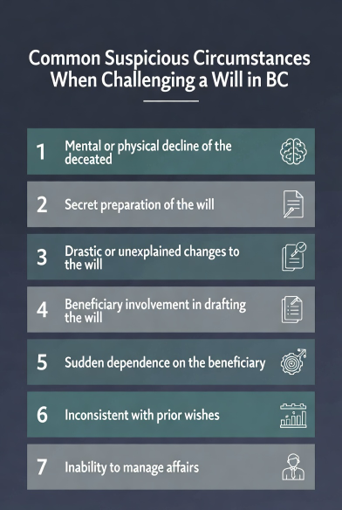
Courts in British Columbia have identified a range of situations that may raise concerns about a will’s validity. You do not need to check every box. Even one or two of the following, depending on the facts, may be enough to warrant a closer look:
- A noticeable physical or mental decline around the time the will was signed
- A will prepared in secret, without the knowledge of close family members
- Dispositions that seem unusual, unfair, or inconsistent with what the person always said they wanted
- A beneficiary who played a role in arranging or preparing the will
- A will-maker who could no longer manage their own personal or financial affairs
- Drastic or unexplained changes from a previous will, particularly when made close to death
- A will-maker who was emotionally, financially, or physically dependent on the person who ends up benefiting most from the new will
Any one of these circumstances can raise questions. Taken together, they can paint a picture that a court will want to examine carefully.
What Happens Legally When You Raise a Concern?
This is where things get interesting from a legal standpoint.
Normally, the person challenging a will bears the burden of proving that something went wrong. But when suspicious circumstances exist, that burden shifts.
The Landmark Case: Vout v. Hay, [1995] 2 SCR 876
The Supreme Court of Canada addressed this directly in Vout v. Hay, [1995] 2 SCR 876, which remains the leading authority on this issue.
What happened in that case:
- An 81-year-old man left the bulk of his estate to a 24-year-old woman who had helped him on his farm
- He cut out his own family almost entirely
- None of his relatives had even known she existed
- The will was challenged, and the case went all the way to the Supreme Court
What the Court decided:
When suspicious circumstances are present, the person seeking to uphold the will — not the person challenging it — must prove that the will-maker genuinely understood and approved of the contents, and had the mental capacity to make it.
This is a meaningful shift. Rather than you having to prove something went wrong, the other side must prove that everything was above board.
It is worth noting that suspicious circumstances must be specific and grounded in real facts, a general sense of unease is not enough on its own. But when the facts support it, this legal framework can open the door to a serious challenge.
📖 Related reading: How Will Challenges Work in BC Courts | YLaw
Undue Influence — A Separate but Related Concern
Suspicious circumstances can also point to something beyond capacity issues. Sometimes a will is changed not because a person lacked mental capacity, but because someone close to them applied pressure, whether through manipulation, isolation, emotional coercion, or outright threats.
This is known as undue influence, and it is treated somewhat differently under the law:
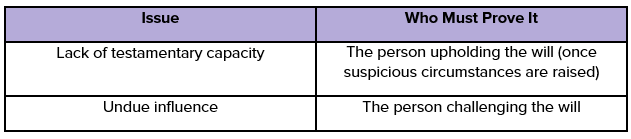
Unlike capacity, undue influence is something the person challenging the will must prove. However, suspicious circumstances can lay the groundwork for that argument — particularly where a beneficiary had significant control over the will-maker’s daily life, finances, or access to other people.
What Can a Lawyer Do For You Now?
If something about your parent’s last-minute will change does not feel right, talking to an estate litigation lawyer is the most important call you can make. Here is what Leah Vidovich at YLaw can do for you:
- Review the details of your situation. Leah will help you pull together all versions of the will, medical records, financial documents, and a timeline of what happened leading up to the signing so nothing important gets missed.
- Analyze the circumstances. Leah will identify which suspicious circumstances apply to your case, assess the evidence, and explain what British Columbia law says about situations like yours.
- Give you an honest assessment of your chances. You will get a straight answer about the strength of your case based on the facts, the law, and how BC courts have decided similar will challenges, before you decide whether to move forward.
- Walk you through your legal options. Whether the issue is lack of testamentary capacity, undue influence, or another ground entirely, Leah will explain every option available to you and what each one involves.
- Make sure you do not miss critical deadlines. Estate litigation has time limits. Acting early protects your ability to gather evidence, secure witness accounts, and meet the legal deadlines that matter.
Estate litigation in BC has strict deadlines. Evidence can disappear. Witnesses’ memories fade. The sooner you speak to a lawyer, the better your position.
Contact Leah Vidovich at YLaw Today →
Frequently Asked Questions
These questions are answered in plain language to help you understand your options.
Can a will be challenged after it has been filed with the court?
Yes. A will can be challenged after it has been filed, but there are time limits, and it is important to act quickly. Speaking to an estate litigation lawyer as soon as possible is strongly advisable.
What is testamentary capacity in BC?
Testamentary capacity means that the person making the will understood what a will is, what property they owned, who their close family members were, and how the will would divide their estate. If they lacked that understanding at the time of signing, the will may be invalid.
What evidence do I need to challenge a will in BC?
Useful evidence includes earlier versions of the will, medical records from around the time of signing, communications between the will-maker and beneficiaries, financial records, and statements from people who knew the will-maker. A lawyer can help you identify and preserve the right evidence.
How long does a will challenge take in BC?
It varies depending on the complexity of the case and whether it is settled or goes to trial. Many estate disputes are resolved through negotiation or mediation without a full trial. Leah Vidovich can give you a realistic timeline based on your specific situation.
What if the will change was just a few weeks before my parent died?
Timing alone is not enough to invalidate a will, but it is one of the key factors courts consider — especially when combined with other suspicious circumstances such as health decline, secrecy, or a beneficiary’s involvement in the will’s preparation.
📞 Ready to Talk?
Call or contact Leah Vidovich at YLaw today to discuss your situation in confidence and find out what BC law can do for you.
Book a Consultation with YLaw →
YLaw serves clients across British Columbia, including Vancouver, Langley, Burnaby, Richmond, and the Lower Mainland.
This article is for information only and does not constitute legal advice. It does not create a lawyer–client relationship with YLaw or any of its lawyers. Laws and policies change, and information here may not reflect the most current legal developments. For full details, please contact us to obtain advice about your specific situation.
Our Lawyers

Estate Litigation | Wills Variation Claims (WESA) | Family Law | Civil Litigation