

How to Approach Divorce Mediation to Get What You Want: A Guide for Divorcing Couples in British Columbia
Delving into the intricate world of family law during the emotional tornado of a divorce can feel like trying to solve a Rubik’s cube blindfolded. However, choosing mediation over court battles can save you money, the hours in a day, and the emotional strain that many remember for the rest of their lives and would like to avoid at all costs.
For couples in British Columbia, learning how to approach divorce mediation with effective strategies is vital. Below are some tips, or ‘cheat codes’ if you will, to aid you in reaching the resolution you seek.
Table of Contents
- 1 1. Come Prepared: A Divorce Mediation Checklist
- 2 Meet Our Mediation Team
- 3 2. Leave Baggage at the Door
- 4 3. Hire a Skilled Divorce Lawyer
- 5 4. Open Communication: The Best Strategy
- 6 5. Your Children’s Best Interests
- 7 6. Keep a Hawk-eye on Your Finances
- 8 7. Sit on it and be Patient
- 9 8. Civility: Your Secret Weapon
- 10 Contact Our YLaw Mediators
1. Come Prepared: A Divorce Mediation Checklist
Just as you wouldn’t step onto a high stakes competition without a plan, approaching divorce mediation without a comprehensive checklist can cost you fortunes.
Discuss big-ticket items such as the division of marital assets, child custody, and healthcare provisions. Simultaneously, don’t forget smaller yet significant points. Do you have a favourite painting, a vintage vinyl collection, or a beloved family pet? Everything is on the table, and in divorce negotiations, these seemingly small points can become significant factors.
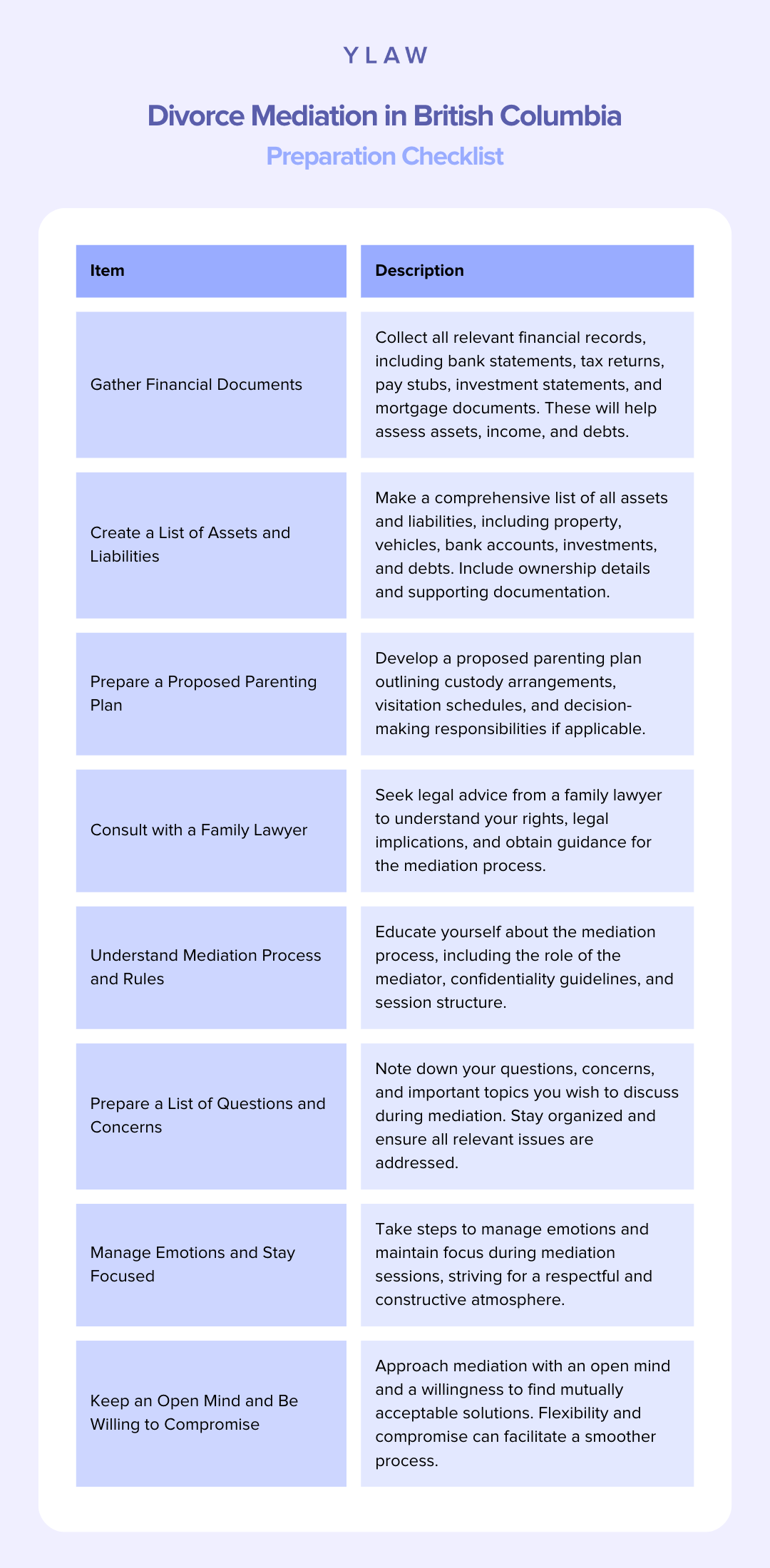
Here is a list of important items to go through to come prepared for divorce mediation in British Columbia:
2. Leave Baggage at the Door
Prepare yourself for what you are willing to lose, not what you want to gain. Mediation is about rational compromise, not revenge or maximizing gain.
Try to clear your mind. Enter the mediation process viewing it as an opportunity to negotiate a fresh start. It’s a new chapter, and while it’s hard to forget past grievances, those old battles should remain in the past if you want to move forward. Letting go of this emotional baggage can be liberating and can enable you to approach discussions with an open, clear mind.

3. Hire a Skilled Divorce Lawyer
Divorce mediation is less a cutthroat competition and more a delicate dance of negotiation. Still, having a skilled divorce lawyer on your side is as vital as having a good coach. An experienced divorce lawyer can decode legal jargon, explain your rights, provide strategic advice, and make sure the final agreement is legally watertight. They’ll ensure you’re not stepping on a legal landmine but are treading the path of fairness and justice.
4. Open Communication: The Best Strategy
Talk about your goals, not your position. This is key. Because it is only when you talk about your goals that you may be able to find common ground, and compromise. Communication is not just about talking; it’s also about listening. This is particularly true in divorce mediation. Speaking openly about your expectations and fears, as well as understanding those of your soon-to-be-ex-spouse, can be the key to unlocking a smoother process.
A successful mediation session isn’t about who can shout the loudest but who can listen the most effectively. It’s not about fighting for the biggest piece of the pie but about creating a new pie that’s shared fairly.
5. Your Children’s Best Interests
Put yourself in your child’s shoes and ask what would your child want to see. Most children want nothing more than receiving the love of their parents, and for those parents to remain together. If you can’t remain together, how can you make sure you minimize the harm to your child and ensure they receive all the love they deserve?
If you’re parents, your children should always be the main characters in your story. Prioritize their interests above all else. You might be divorcing each other, but you’re not divorcing your kids. When negotiating child custody, consider their routines, school commitments, and emotional needs. The more you can maintain stability for them during this time of change, the better they’ll adapt and thrive.
6. Keep a Hawk-eye on Your Finances
Money. It’s often the root of many a battle in a divorce proceeding. From splitting shared assets to deciding who takes responsibility for shared debts, financial matters hold a crucial position. It’s not just about dividing the treasure chest; it’s about planning for a sustainable future. Be mindful of the financial implications of every decision, ensuring both parties can sail into the future without sinking.

7. Sit on it and be Patient
Remember, Rome wasn’t built in a day, and neither will your divorce agreement. Mediation can be a long, drawn-out process, but patience is key. Hasty decisions could lead to regrettable outcomes. Ensure you understand every clause, every agreement point, every implication of your decisions before signing on the dotted line.
You do not have to make decisions on the spot. You are allowed to think, analyze and assess. Do not rush into final agreements until you are 100% informed of all the consequences and can live with them.
8. Civility: Your Secret Weapon
Choosing to remain civil during this emotionally fraught process can be like mastering a hidden superpower. Animosity only inflames tension and impedes progress. If tempers rise and dialogue descends into a shouting match, take a step back, let off steam, and only return to the table when all parties have cooled down. A civil attitude can turn a battleground into a negotiation table.
Contact Our YLaw Mediators
At YLaw, we have some of the most prominent and experienced mediators who are familiar with almost every case, personality type, and fact pattern. Book a FREE 15-minute consultation with our mediators to assess whether we can help you navigate family law mediation and find a final solution.
This article is for information only and does not constitute legal advice. It does not create a lawyer–client relationship with YLaw or any of its lawyers. Laws and policies change, and information here may not reflect the most current legal developments. For full details, please contact us to obtain advice about your specific situation.